Androgenetic Alopecia vs Traction Alopecia: Same Shedding, Totally Different Stories

Here’s the thing: not all hair loss is created equal. If you’re typing “androgenetic alopecia vs traction alopecia” into Google at 2 AM, staring at your hairline in the mirror, you deserve clarity. Not another vague promise from a shampoo ad.
Let’s break this down.
A quick note on where I’m coming from
I’m Gavin Larsen, an acupuncturist and TCM practitioner with over a decade in clinic. I’ve worked with everyone from high-stress executives to athletes who thought their receding hairline was “just genetics.” (Spoiler: it rarely is just genetics.) What I’ve learned is that hair loss isn’t one problem. It’s a reflection of how well your body’s internal systems are running. Circulation, absorption, hormone signaling, and scalp repair. They’re the “growth engines” most people forget to check.
Meet the usual suspect: androgenetic alopecia (AGA)
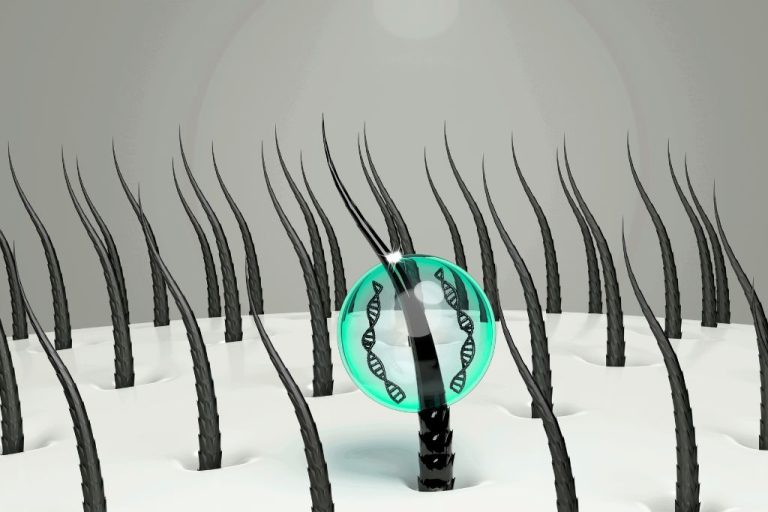
This is the classic pattern hair loss. Think slow-motion shrinkage of hair follicles thanks to a mix of genes and hormonal sensitivity (especially to DHT). Over time, thick hairs become peach fuzz, and the scalp starts to show through.
Dermatologists spot it under a trichoscope. That magnifying lens they use like a CSI tool. In AGA, the giveaway is hair-shaft diameter diversity: some thick, some thin, some barely there. If more than 20% differ in thickness, you’re looking at AGA. A 2023 Journal of the American Academy of Dermatology study by Rodrigo Pirmez MD highlighted this as one of the most reliable markers of pattern hair loss.
It’s non-scarring at first, meaning follicles are alive, just sluggish, but left alone, it tends to progress. You can think of it like your follicles slowly switching to “low-power mode.”
The other culprit: traction alopecia (TA)
TA is the overachiever’s alopecia. The one that shows up because of tight ponytails, braids, extensions, or man-buns cinched like a drum. It’s mechanical, not hormonal. You’ve literally pulled the hair out of its happy home.
Early on, follicles are just irritated, and growth can bounce back once tension stops. But if the pulling continues, inflammation turns into fibrosis (scarring), and follicles wave the white flag. The same 2023 trichoscopy review notes that in scarring cases like this, loss of follicular openings and perifollicular halos are key red flags.
So yes, your hairstyle can betray you, beauty is pain, but it shouldn’t cost your edges.
Androgenetic Alopecia vs Traction Alopecia
Same shedding, totally different reasons. Use this quick visual to spot the difference, and choose the right plan.
| Feature | Androgenetic Alopecia AGA | Traction Alopecia TA |
|---|---|---|
| Primary Cause | Genetic & hormonal sensitivity (DHT-driven) leading to gradual follicle miniaturization. | Mechanical pulling or tension from tight styles like braids, ponytails, or extensions. |
| Typical Pattern | Men: receding hairline + crown; Women: diffuse thinning on top with preserved hairline. | Margins/temples where tension hits hardest — often starting at the frontal hairline. |
| Trichoscopy Clues | Hair-shaft diameter diversity >20% (mix of thick & thin hairs), increased single-hair units, yellow dots. | Hair casts, perifollicular redness; chronic traction can show scarring or lost follicular openings. |
| Scarring Risk | Non-scarring early; may progress if untreated. | Low if tension stops early; chronic cases can scar with limited regrowth. |
| First Moves | Confirm with trichoscopy; support circulation, absorption, hormone balance, and scalp repair. | Stop traction immediately. Rotate styles, reduce tension, calm inflammation, restore circulation. |
Why this matters
You can’t fix traction with finasteride, and you can’t fix AGA by changing hairstyles. Both can improve, but only if you treat the actual reason your follicles are stressed. That’s where internal system support becomes the secret sauce.
Ready to make your current routine finally work?
If you’re stuck between harsh meds you don’t want and “natural” fixes that never seem to do much, The 30 Day Pattern Mapping™ Regrowth System is built for this exact situation.
It’s a clinic-tested method that turns your body’s growth systems back on (circulation, absorption, hormone signaling, and scalp repair) so everything you’re already doing finally pays off. Think of it as teaching your scalp how to receive help again.
Because the truth is, your follicles don’t need a miracle product.
They just need the lights switched back on.